Oneness is a Moral and Ethical Perspective
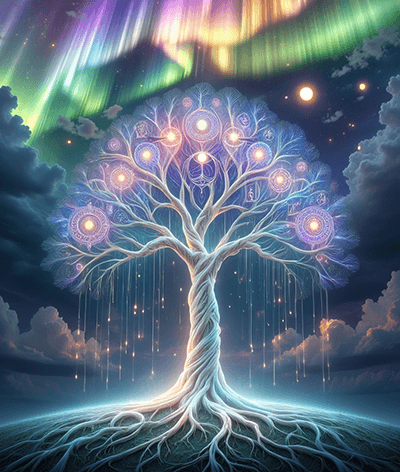
Oneness as a Moral and Ethical Perspective
I've recently been exposed to a viewpoint which had me reconsider something I thought I had put to rest long, long ago. It is the idea that enlightenment (or cosmic consciousness) does not contain a moral imperative or ethical position.
Within that supposition is another: that awakening is really the only purpose of the universe, and thus, anything that brings a human into awakening is to be celebrated.
This is a dangerous and misguided understanding, in my opinion. It collapses Absolute Reality with Relative Reality—ultimately, they are not separate, but bear with me here—bringing the absence of any position from the Absolute into the duality of the Relative. This does not work, nor should a human being, living a human life, attempt to do so.
Awakening and the Experience of Oneness
But let's start with what "awakening" and Absolute Reality shows us. First and foremost, it's a direct experience of no separate self. It is an experience of oneness. To "wake up" is to see through the veil of separateness and to collapse all dualities—life and death, self and other, and yes, good and bad. But the primary means to this is the dissolution of a distinct, separate self.
Through this dissolution we discover all things are ultimately us, we are ultimately all things, and even the distinction of "things" and "us" is an illusion. Really, we are just One Body. But after awakening, the self must reform in order to engage in the Relative world of this and that. And then we see what the Beatles sang: "I am he as you are he, as you are me and we are all together."
Yes, there is self and other (he and you and I), but we are still one thing, and we are together. This is the core of an ethical perspective grounded in the truth of oneness.
From Absolute Surrender to Relative Action
Surrendering into the Absolute, we let go of all discrimination, all boundaries, all separation. As distinctions begin to be made again, we re-enter the Relative—the world of duality, the world of differences.
The clearest path through this is compassion. When we actualize the Absolute within the Relative, we are manifesting wisdom in our everyday life. Compassion stems from the realization that you are all things, and what is outside is actually you. Compassion is non-duality. It is intimacy. Embodying and expressing non-duality is the expression of oneness. Many call it interconnectedness.
A Clear Ethical Foundation
This is why the first three precepts of the moral and ethical teachings of Buddhism are:
Minimize harm
Maximize good
Do good for others
A clear, precise, simple moral and ethical guideline.
Notice, I haven't even spoken of the Divine, or Spirit, or God, or Love yet. Even without these ideas or experiences (yes, God is an experience), ethical behavior based on compassion and non-separation clearly emerges.
Love as the Essence of the Universe
And in my experience, there is yet another level. When we access The One as an active, creative force, we can experience a type of love that is awe-inspiring, ineffable. A force so blissful, there is nowhere for the self to stand. In the overwhelm, the ego relents—its surrender allowing grace to completely fill the universe throughout all space and time, from start to finish, endlessly, forever, because it has always been. Most importantly, it is NOW.
I posit that the actual substance, raw essence, intrinsic nature of the universe is love. A love from a creator that is unfathomable and strikes such awe in its progeny that only overwhelming bliss remains. This is what is possible in awakening.
Re-Entering the Relative with Gratitude and Purpose
How can there be no moral or ethical perspective to the universe, when its very creation is an expression of infinite love, creativity, and generosity?
Then, returning to the Relative, gratitude emerges. A bone-deep, uncompromising gratitude for this gift. Now is my turn to express what I am made of. How would one choose harm, or not distinguish between good and bad?
The Descent and the Return
In Jewish Mysticism, it is taught that God meant for Adam and Eve to eat the apple. Moreover, the descent from Eden was not a punishment. It was part of the plan all along. We were meant to descend from being purely innocent, naïve, light beings to full human beings that would learn of good and evil from the tree of knowledge—and that process would actually bring us closer to God.
We must learn to make distinctions before we can re-enter the kingdom of light. Before we can ascend and be in closer and closer relation to the divine. By falling asleep to the true nature of the universe, we then are able to wake up (we can't wake up if we don't fall asleep). And in waking up, we then re-enter the Relative, and go through another cycle of distinguishing, discriminating, taking apart. Discerning. Creating. Serving others.
And so we practice "perfecting the perfect"—through love, grace, compassion, creativity, and simply put, kindness.
Learn More