Two Truths
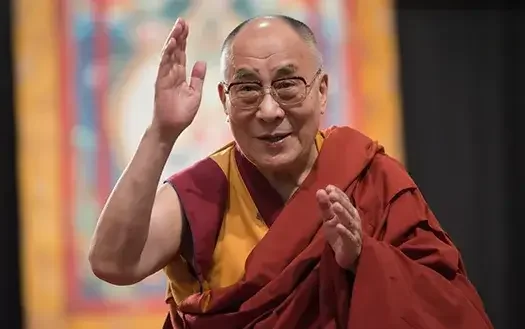
The Dalai Lama’s Teaching on Two Truths
In the video clip linked, the Dalai Lama talks about the “two truths.” One is the truth of the relative world, our 3D, everyday life. The other is the truth of the absolute, the unchangeable, undying Reality of oneness, nonduality, and “emptiness.”
Our lives play out in the realm of the relative: this and that, subject and object, time and space, duality and separation. Time marches forward, and we experience ourselves as separate from the people and objects around us.
Why Seekers Look Beyond the Everyday
Many people turn to the mystic’s path because they sense there is something more, something hidden from sight, a sense that our parents, teachers, science, and even religion have not given us the full picture.
Seekers are born out of this longing. Some become “finders.” In a flash of insight, they experience the ineffable, peering beyond the veil into direct apprehension of the divine, the ground of being, the Reality that underlies all existence. This is often described as emptiness, oneness, or absolute truth.
Yes, there is self and other (he and you and I), but we are still one thing, and we are together. This is the core of an ethical perspective grounded in the truth of oneness.
Returning to the World of Duality
But after glimpsing the absolute, seekers must return to the relative world of differences. This return is often disappointing, because the old reality feels pale compared to the depth of oneness they’ve encountered.
The Dalai Lama reminds us, however, that there are two truths. Neither takes precedence, and neither is more real. Both realities are co-arising, co-dependent, two sides of the same coin. Without one, the other cannot exist.
Two Sides of the Same Coin
This dualistic world of separation is not separate from the unity of oneness. Rather, it is its expression. The world we experience is an ever-unfolding creative process, a divine dance and brushstroke across the infinite field of creation.
To claim the infinite void is superior to the finite is to choose “no-thing” over “things.” But without “things,” how could we experience the “no-thing”?
Healing and Ceremony on Two Levels
Because of this, our work in ceremony unfolds on two interconnected levels:
The Psychological-Emotional Level – dealing with trauma, healing, family history, past wounds, defenses, and the “parts” of ourselves we carry.
The Transcendent Level – engaging with the nature of reality, letting go of attachments, dissolving the self, and releasing narratives and human concerns.
Both paths can support each other, though the latter is not for everyone. Re-Entering the Relative with Gratitude and Purpose
How can there be no moral or ethical perspective to the universe, when its very creation is an expression of infinite love, creativity, and generosity?
Then, returning to the Relative, gratitude emerges. A bone-deep, uncompromising gratitude for this gift. Now is my turn to express what I am made of. How would one choose harm, or not distinguish between good and bad?
The Purpose, Reducing Suffering and Living Fully
Ultimately, what matters most is reducing suffering and increasing well-being, joy, and vitality. We are all called to live in alignment with our purpose, values, and true self-expression. That alone is enough.
If you feel empty or devoid of meaning, the only place to look is within. Frequently, that journey has a spiritual basis and a yearning for truth. Just don’t forget, as the Dalai Lama reminds us, there are always two truths.
Questions
-
The Dalai Lama is the spiritual leader of Tibetan Buddhism, considered the reincarnation of the Bodhisattva of Compassion, a being who chose to be reborn to help humanity. He is a global advocate for peace and non-violence, a defender of Tibetan culture, and the recipient of the 1989 Nobel Peace Prize. His importance stems from his spiritual leadership, his role as a symbol of the Tibetan people's hope for freedom, and his efforts to promote universal compassion and inter-religious understanding worldwide.
-
The Dalai Lama is important as the highest spiritual leader of Tibetan Buddhism, an emanation of the Bodhisattva of compassion, a global symbol of peace and non-violence, and the central figure of Tibetan culture and identity. He has championed universal responsibility, fostered interfaith dialogue, and advocated for the preservation of Tibetan culture and the rights of the Tibetan people, earning him international recognition and the Nobel Peace Prize.
-
"Dalai Lama" means "Ocean of Wisdom" and is the title for the spiritual leader of Tibetan Buddhism, a role believed to be a reincarnation of the Bodhisattva of Compassion. The title combines the Mongolian word dalai ("ocean") with the Tibetan word lama ("teacher" or "master"). The Dalai Lama is considered a tulku, a being who is intentionally reborn to guide others to enlightenment.